

Charitable Giving 101: A Beginner’s Guide to Tax-Smart Donation Strategies
The holiday season is upon us, and with that often comes a desire to give back. Whether through volunteering your time, sharing your expertise, or donating resources like clothing, food, and money, charitable giving is a meaningful way to make a difference. But did you know that smart charitable giving can also benefit your finances? Let’s explore tax-smart donation strategies.
The Tax Benefits of Charitable Giving
When you donate to qualified charitable organizations, you can deduct those contributions on your federal income tax return, potentially reducing your taxable income. However, to claim these deductions, you must itemize deductions rather than taking the standard deduction.
Standard Deduction vs. Itemizing
For 2025, the standard deduction is:
– Single: $14,600
– Married filing jointly: $29,200
– Head of household: $21,900
If your total itemized deductions (including charitable contributions) exceed the standard deduction, itemizing becomes beneficial.
Tax-Smart Charitable Strategies
1. Donor-Advised Funds (DAFs)
A DAF allows you to make a charitable contribution, receive an immediate tax deduction, and distribute funds to charities over time. This is particularly useful for high-income years.
2. Appreciated Securities
Instead of donating cash, donate appreciated stocks or mutual funds. You avoid capital gains taxes while receiving a deduction for the fair market value.
3. Charitable IRA Distributions
If you’re over 70½, you can make direct IRA distributions to charities, satisfying required minimum distributions without increasing taxable income.
4. Charitable Bunching
Group charitable contributions into certain years to exceed the standard deduction, then itemize in those years.
Documenting Your Donations
To claim charitable deductions:
– Keep receipts for donations under $250
– Obtain written acknowledgment for donations $250 or more
– Maintain detailed records of non-cash donations
– Get a qualified appraisal for significant non-cash gifts
Choosing Qualified Charities
Not all organizations are eligible for tax-deductible donations. Verify charity status through:
– IRS Tax Exempt Organization Search (www.irs.gov)
– Charity Navigator (www.charitynavigator.org)
– GuideStar (www.guidestar.org)
Maximizing Impact
Combining tax benefits with charitable impact creates a win-win situation. At Austin Wealth Management, we help clients develop charitable giving strategies that align with their values and financial goals.
Let’s talk about how you can give back while optimizing your tax situation. Schedule a consultation with our team today.
More Articles

Final Countdown: Your Year-End Contribution and Transaction Deadlines
December is a good time to review deadlines for contributions, distributions, charitable giving, and account updates. Many account actions must be completed before December 31...

Accessing Your 2025 Tax Documents
Your 2025 tax forms are available for download from Charles Schwab. If you opted to receive your tax documents by mail, they should arrive soon. How to Access Your Tax Forms Online: Charles Schwab Client Portal...
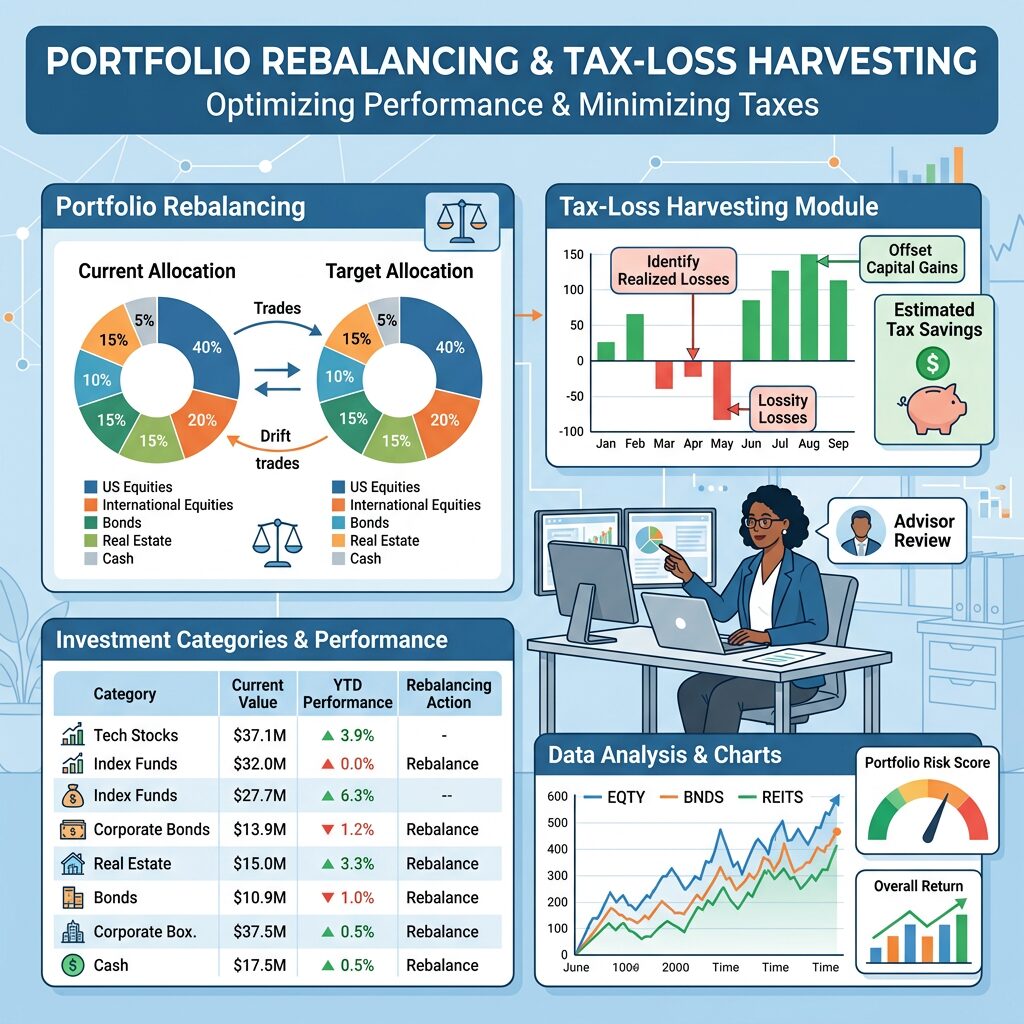
How Portfolio Rebalancing and Tax-Loss Harvesting Help Austin Wealth Management Improve Client Outcomes
Behind every AWM advisor is a dedicated team of investment professionals meticulously looking at each client account and watching for opportunities to improve our clients investment performance...